
Need for a Safe Harbor
Sometimes, strain in healthcare does not come from a single crisis.
It comes from uncertainty that never resolves.
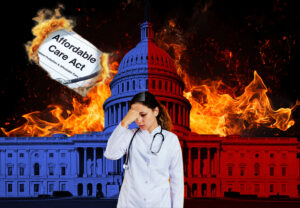
In recent weeks, news coverage has focused on congressional gridlock around Affordable Care Act subsidies. Coverage levels may change. Premiums may rise. Some people may delay or lose access to care. These discussions often center on numbers, budgets, or political outcomes.
But another part of the story is easier to miss.
How Policy Uncertainty Reaches the Exam Room
For care workers, policy uncertainty shows up quietly — in exam rooms, hospital beds, and conversations that are hard to finish.
A patient asks whether they should start a treatment now or wait. A clinician hesitates, not because they don’t know what good care looks like, but because they don’t know whether the system will support that care next month.
This kind of uncertainty creates soft signals:
- Ethical discomfort
- Persitent unease
- A feeling of being pulled between what is right and what is possible
These signals are often small. They don’t announce themselves as emergencies. They accumulate.
The Quiet Threshold of Moral Injury
When coverage fluctuates, care workers may begin adjusting plans, shortening conversations, or offering less than they know would be best — not because they don’t care, but because the system around them is unstable.
Over time, something important happens.
A threshold is crossed quietly.
Care workers may begin to feel they are participating in harm they did not choose and cannot prevent. They carry responsibility for explaining limits they did not create. They absorb the emotional weight of decisions made far upstream.
This is not burnout.
This is moral injury in care workers — the distress that arises when people are repeatedly forced to act against their own standards of care.
Why Moral Injury Needs a Safe Harbor
At My28Days®, we pay attention to early signals like these.
Not to judge them.
Not to fix them.
Not to rush past them.
But to allow them to be noticed before they harden into injury.
Moral injury does not start with collapse. It starts when ethical signals have nowhere to go.
Sometimes, what people need first is not an answer — but a place where those signals can be acknowledged, held, and understood.
Full AP report:
My28Days.org is an educational and advocacy platform supported by the Mary Elizabeth Conover Foundation. For more information or to lend support, contact Office@ConoverFoundation.org


